
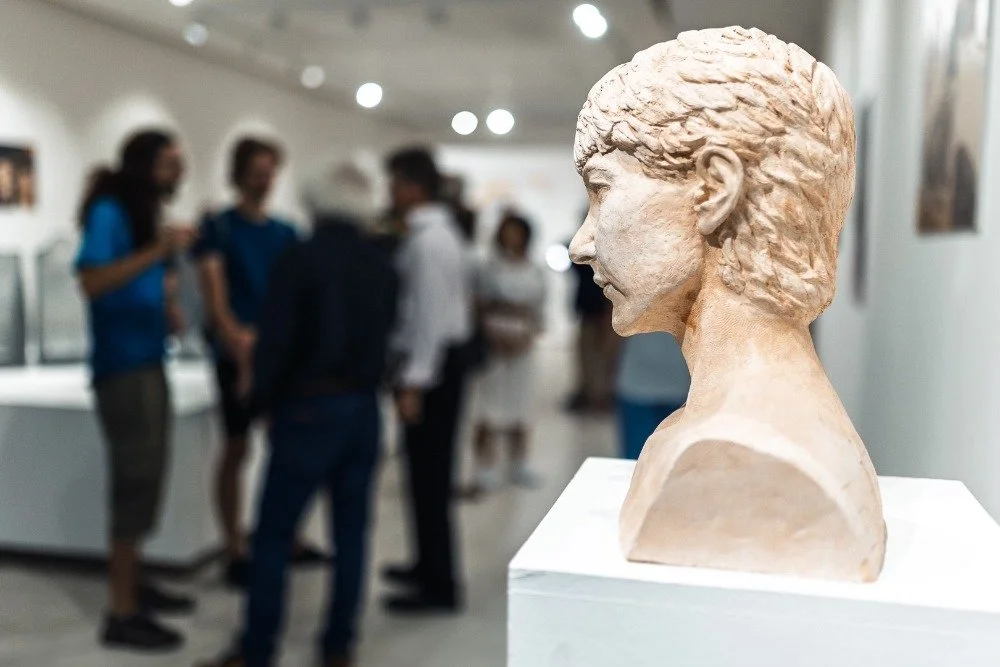
We work with a variety of international artists to showcase their work, with a focus on those that respond to the subject of psychoanalysis or to Jane’s practice.
Current
Exhibition
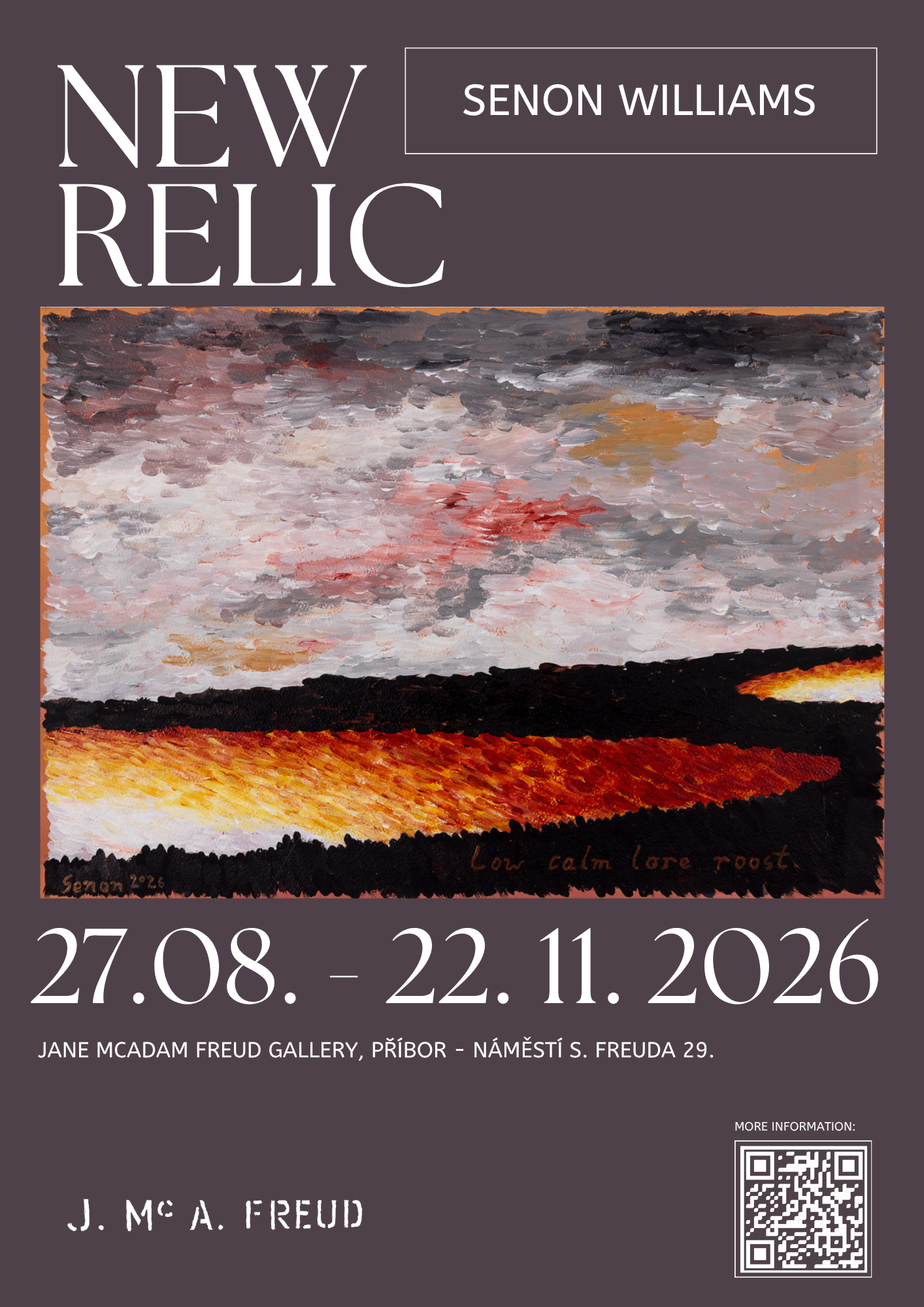
Jane McAdam Freud Gallery presents New Relic, an exhibition by resident artist Senon Williams.
27th August - 22nd November 2026
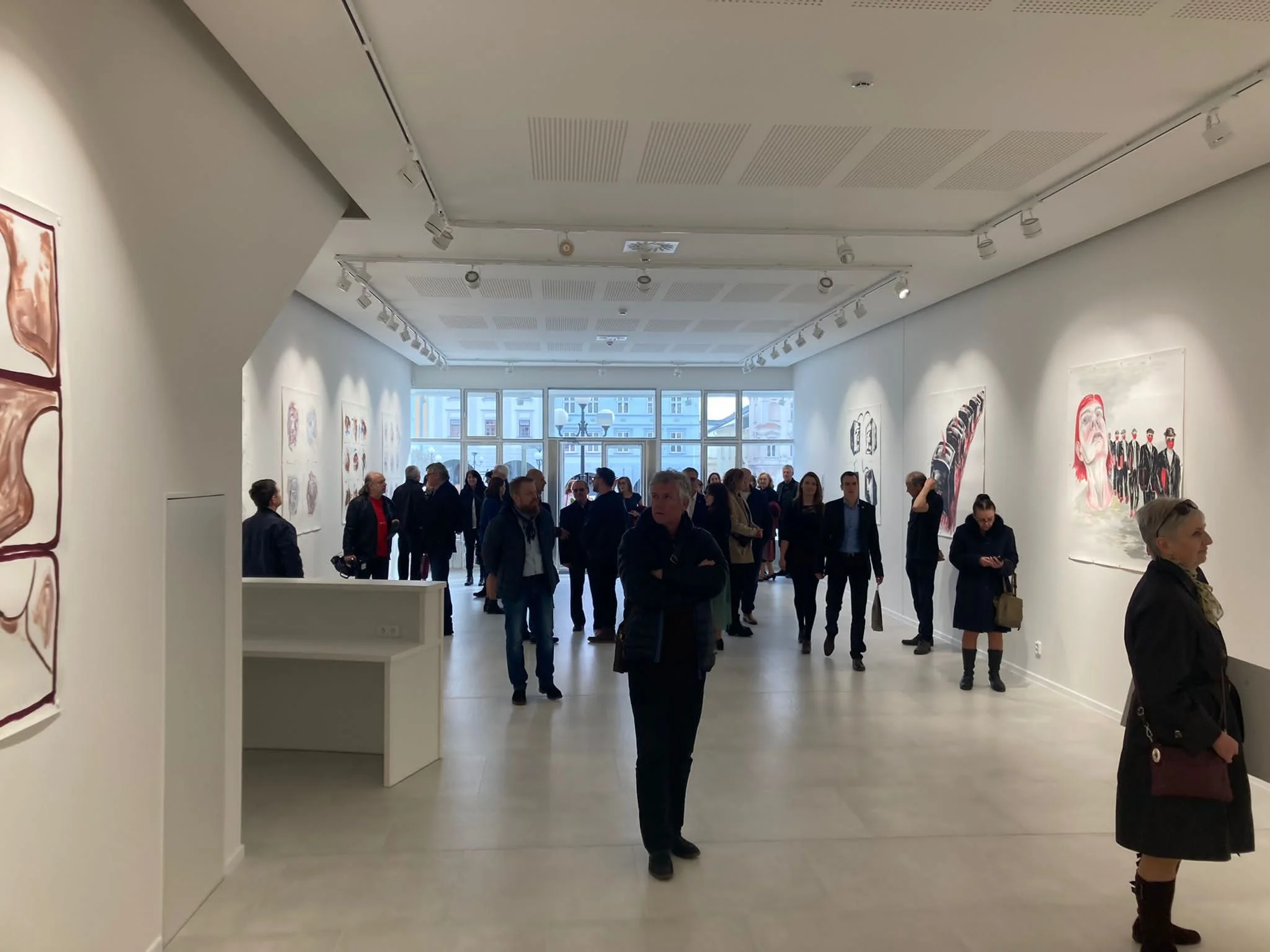
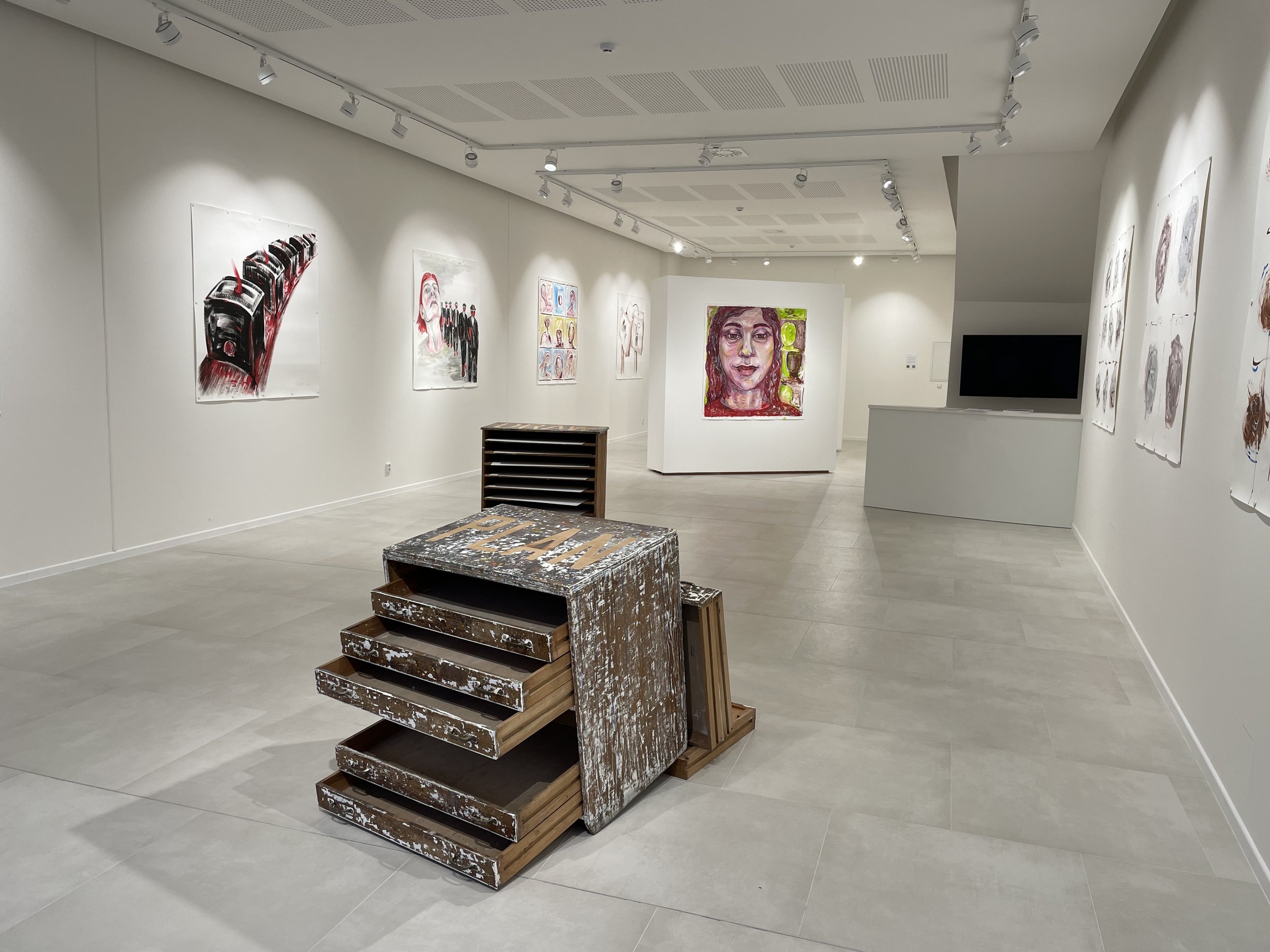
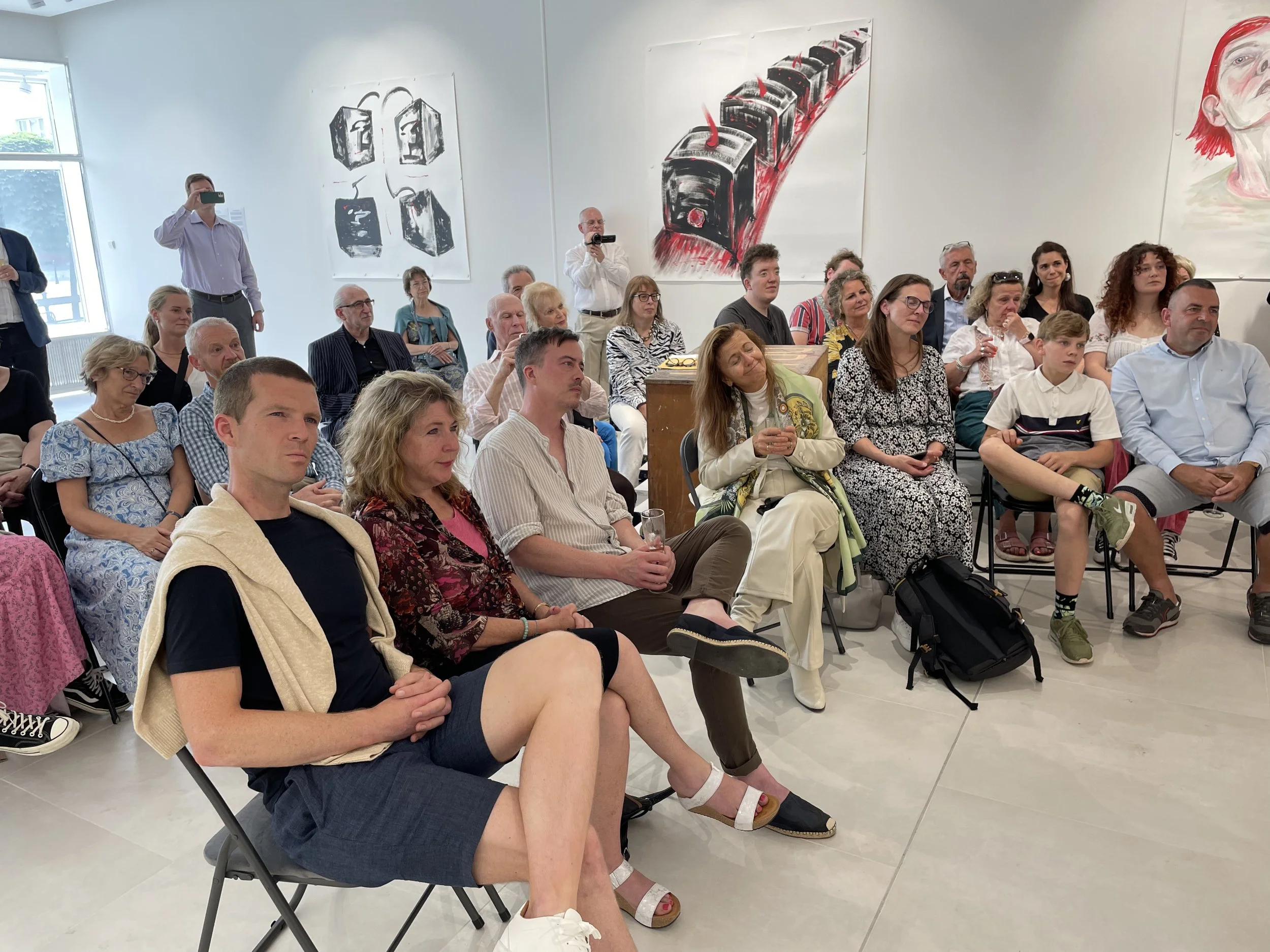
New Relic brings together sculpture, drawing, installation, poetry and moving image in an immersive environment that departs from the conventions of a traditional exhibition. Tables, flat files and wall-based displays reveal an artistic practice that moves fluidly between finished works, research material and works in progress.
Exploring themes of generational trauma, memory, hope, ritual and survival, Williams invites visitors into a space where personal histories and psychoanalytic ideas intersect. The exhibition encourages slow looking, reflection and discovery.
Selected works from the Jane McAdam Freud Estate, curated by Georgia Powell, are presented in dialogue with Williams' installation, highlighting shared concerns with memory, the body and the unconscious.
The exhibition also features Tilt Horizon, a film by Senon Williams and Tabbert Fiiller, presented on continuous loop.
Freud Artist Residency (F.A.R.) was established by the Jane McAdam Freud Estate in 2023 to celebrate Jane McAdam Freud’s contribution to contemporary art and psychoanalysis by supporting artists whose practices engage with her work, collection, and familial legacy.
Current and Previous Exhibitions
-
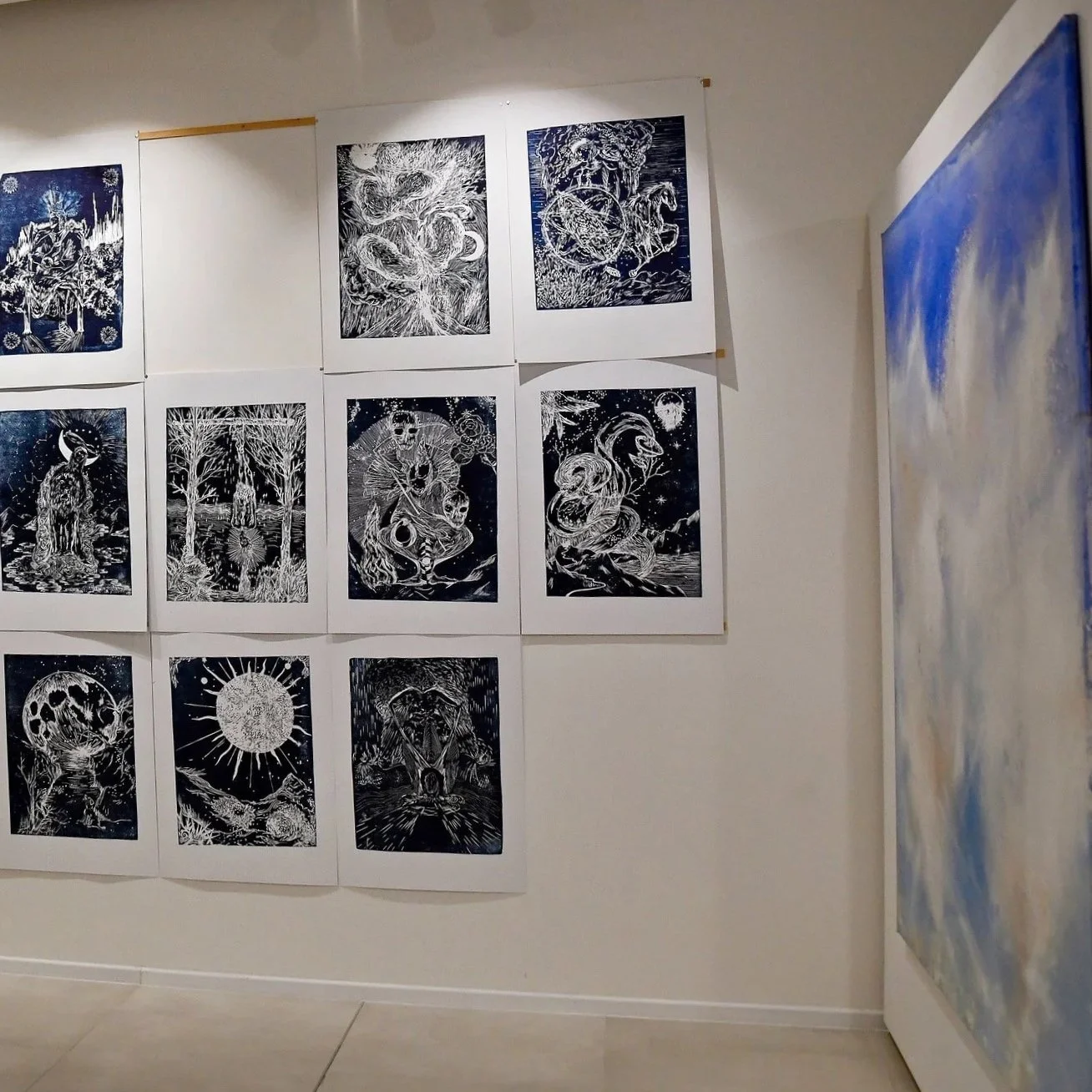
Jan Pražan 'Guides'
"Art teaches us that we are made up of an infinite number of stories. We are not 'mechanical beetles'... but rather multi-mythical persons – beings from many stories, always living some mysterious plot."
Thomas Moore
From the very beginning, Jan Pražan reflected in his paintings his desire for spiritual self-knowledge and experiences of wholeness, which gradually led him, through the practice of meditation, to experiences of extraordinary states of consciousness induced by the sacred visionary plant ayahuasca.
The paintings in which he depicted these intense psychedelic and visually rich experiences were exhibited in 2015 at the exhibition "Source" at the Horácká Gallery of Fine Arts in Jihlava (together with Dominik Strouhal). These paintings bear witness to Jan's spiritual transformation—the process of opening up and unifying his self with a more comprehensive transpersonal landscape of consciousness—and at the same time marked a significant change in his previous painting style.
His vision of a living, imaginative universe vibrating with colour and energy allowed him to fully develop a spontaneous, processual approach to painting. As the author states, painting is for him above all a process, a joy, and a spiritual experience, in which he himself becomes an instrument of a universal force that he does not consciously control, immersing himself fully in the creative process and "disappearing into it."
-
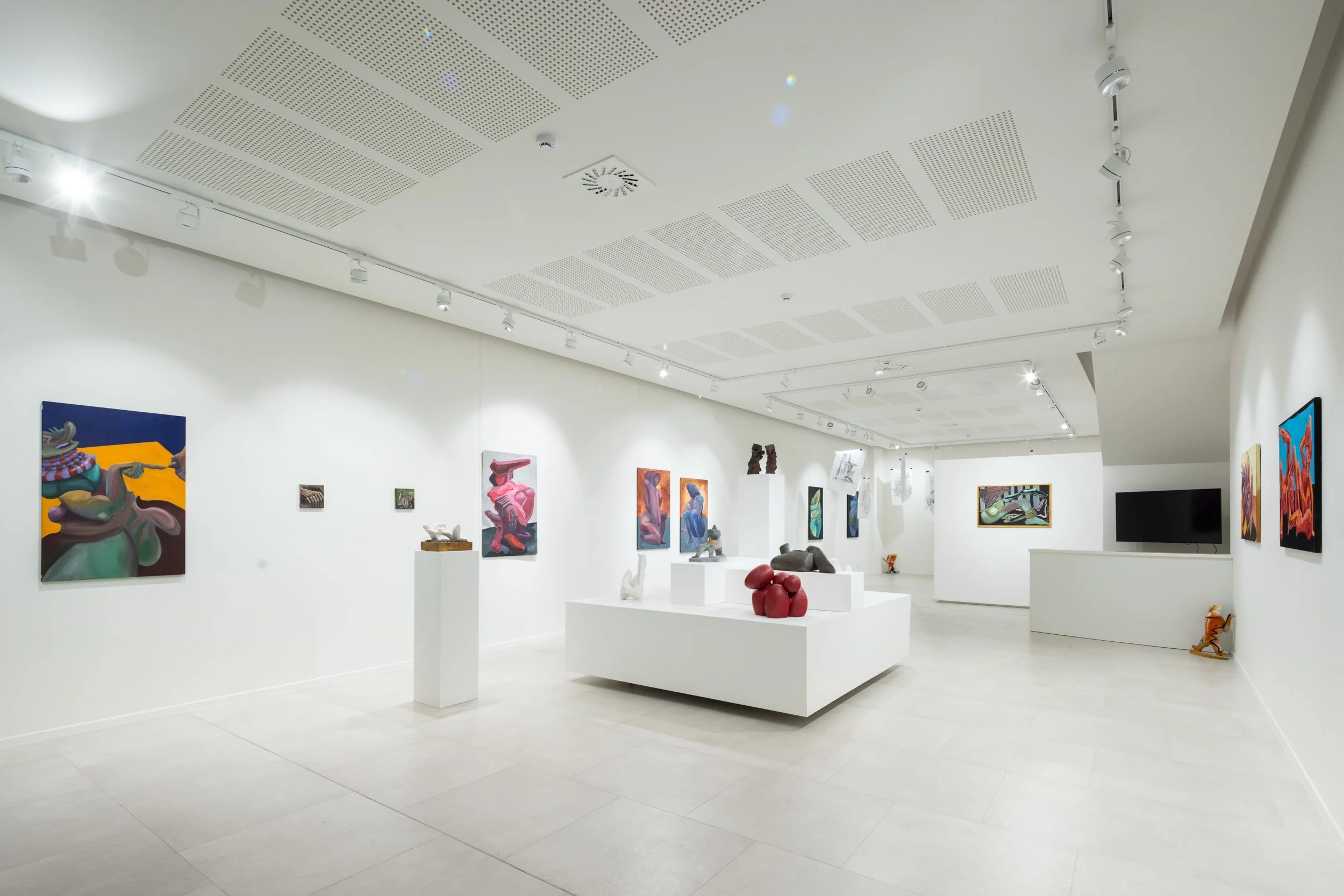
Nicolas Holub
Nicolas Holub is a young local artist with roots in Příbor and the winner of the PříborArt 2025 competition, which was part of the project of the same name supporting emerging artists from the region.
In his work, Holub combines classical sculptural techniques with an intuitive and process-based approach to both material and subject. The exhibition Synonymum proces thematically follows his 2023 diploma project. Here, the artist presents sculptures and paintings created through a layering technique, based on preparatory sketches that gradually transform into the final form of the artwork.
Holub’s process-oriented method is a continuous search for the boundaries between order and spontaneity. In his works, he allows himself to be guided by the unfolding process, exploring relationships, dialogues, eroticism, and various human moments that lend his practice emotional depth as well as a natural sense of humanity. His surreal visual language emerges from a combination of working mechanisms with matter and colour, bringing the viewer to the threshold between reality and dream.
-
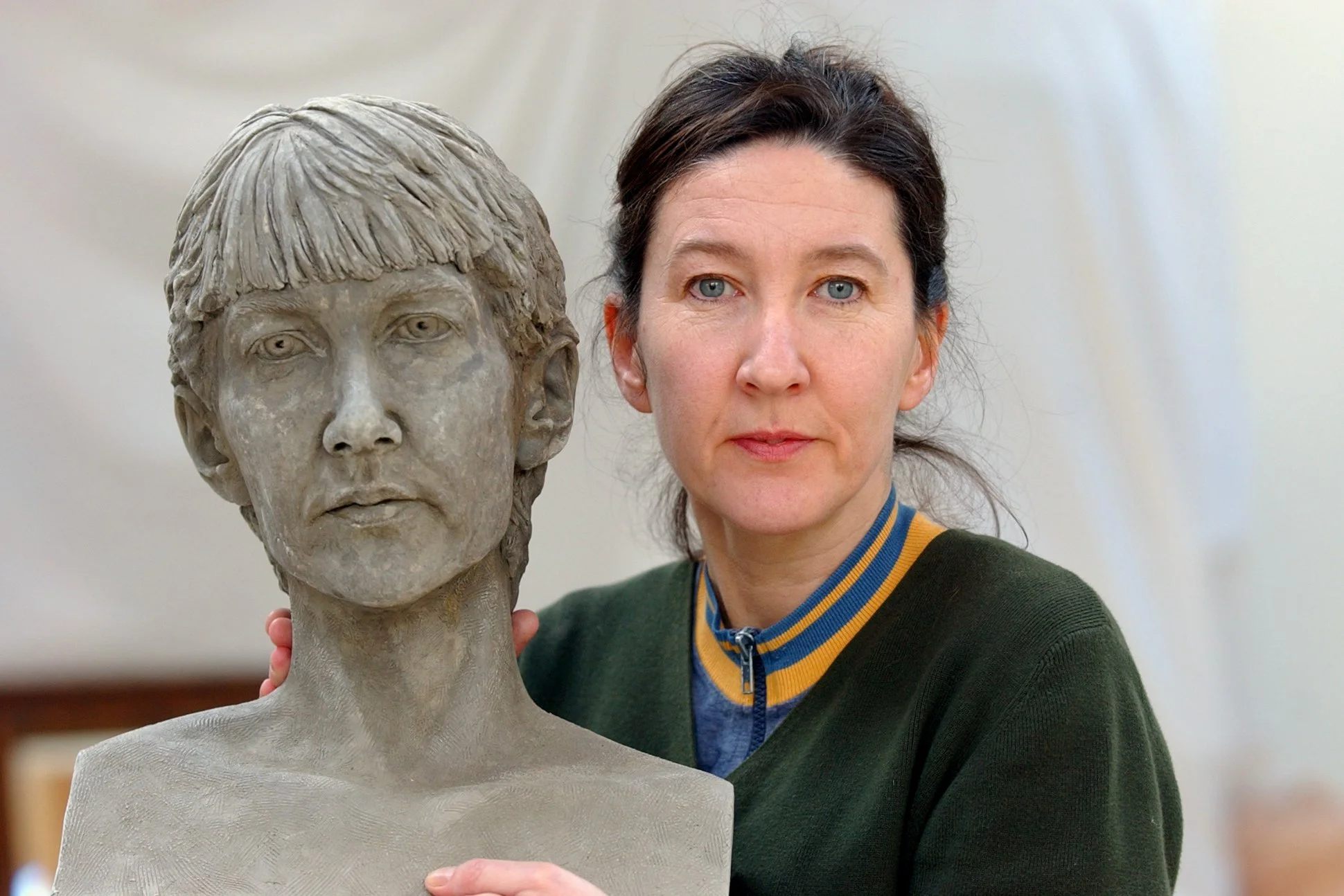
'Getting to Know Jane'
This exhibition seeks to re-introduce Jane to the town of Příbor, through a series of images and selected works.
-
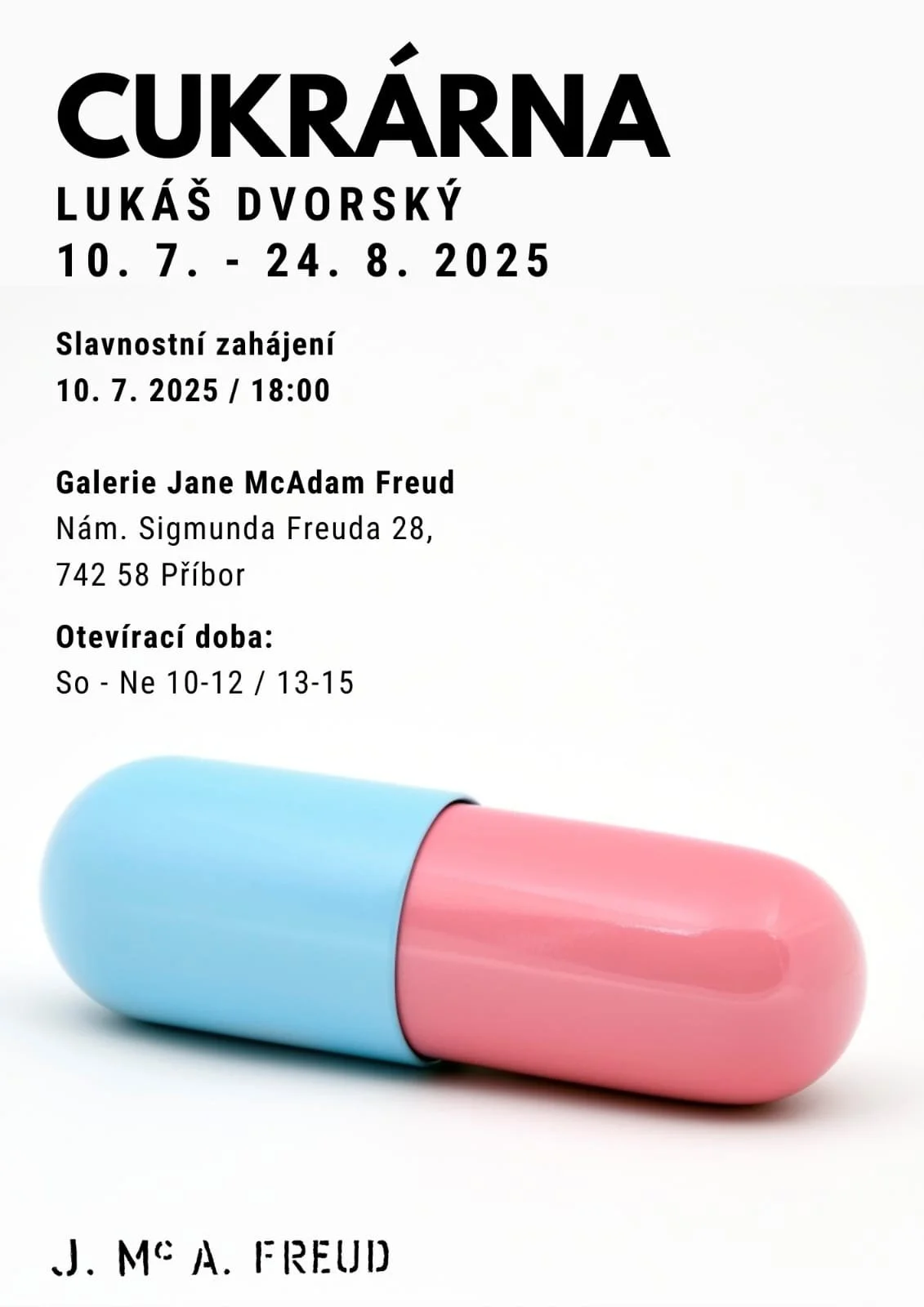
Lukáš Dvorský ‘Sweet Shop’
“I observe the rapid changes around me. I ask myself whether they are necessary, natural, for better or worse—or artificially created. I have been teaching for eight years now, and even in this relatively short time, I have noticed shifts in the values and behavior of young people. I wonder whether the pace at which the world around me is changing is natural, and whether it is heading in the right direction. I question why this is happening. Perhaps I’m a skeptic. The state we find ourselves in does not leave me calm. I don’t see things through rose-colored or baby-blue glasses.
The pill—as a tool of uncertain change—I work with it across various layers of meaning, which may intersect.
I like to work with gold. It is a remarkable mirror of human nature; the desire for it has shaped all of history. It reflects frenzy and greed.
I believe the essence of burning human desire does not change much—whether it's the desire for power or the craving for something sweet, for instant gratification.”
-
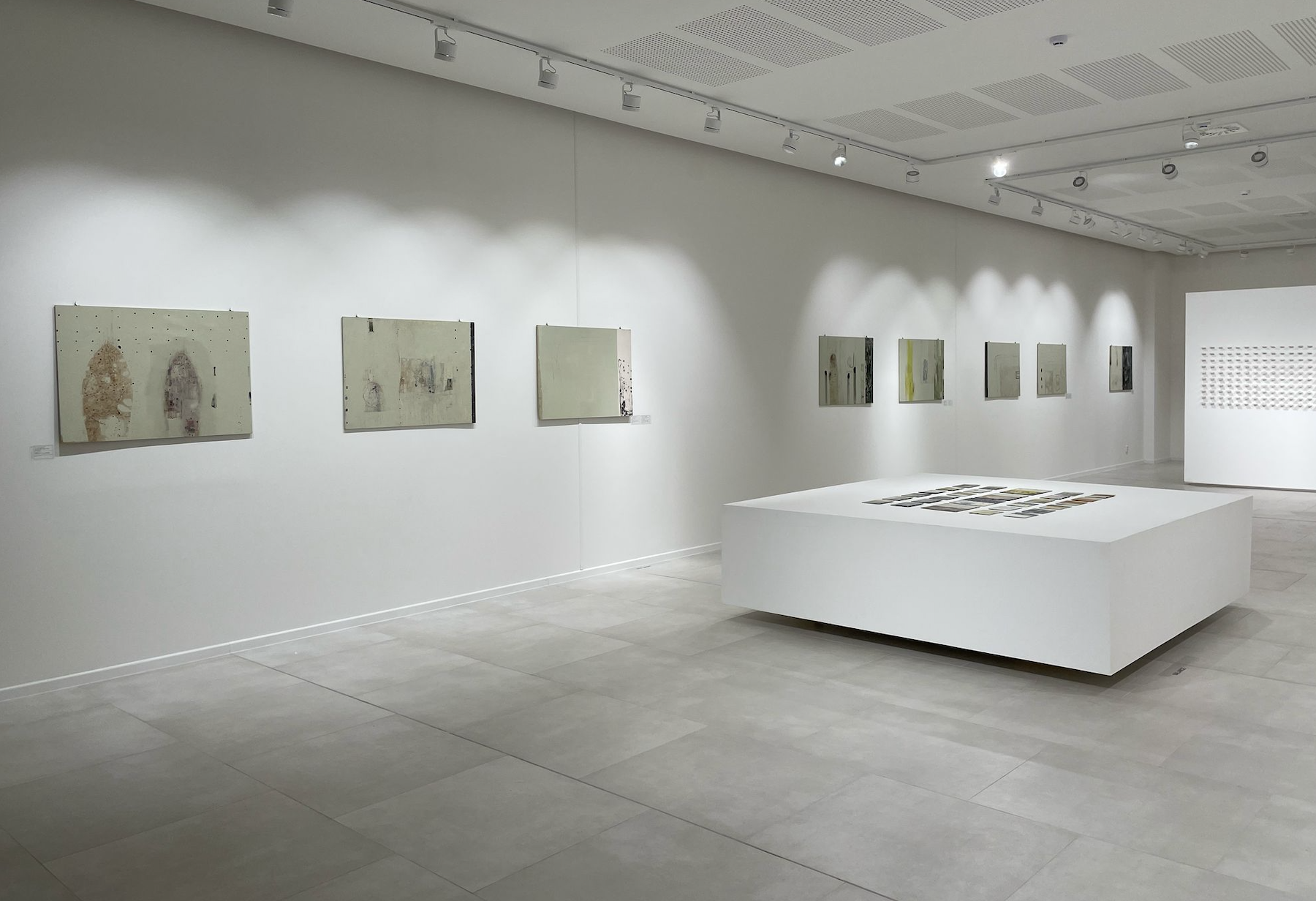
Iain Patterson 'Out West | Balance'
Iain Patterson received both his undergraduate and post graduate degrees from Edinburgh College of Art, graduating in 1970. He was awarded the Andrew Grant Travelling Scholarship which took him to former Czechoslovakia, Yugolavia and Albania and following this lectured in Drawing and Painting at Edinburgh College of Art from 1977-2008, specialising in Life Drawing, Anatomy and Painting Composition to students from First Year Studies to Post Graduate Scholarships.
Patterson’s particular interest in vernacular architecture, saw him renovate a croft house in the Hebrides over 15 years.
The Museum of Architecture in Wroclaw, Poland and Gallery of Fine Art (Dum umeni) in Ostrava, Czech Republic provided, thanks to the initiative of the Cabinet of Architecture, the opportunity to show artwork and give talks on “Architecture Without Architects”. The talk at Trmal Villa in Prague and Villa Tugendhat in Brno on Charles Rennie Macintosh linked Scotland to the European Modernist World.
Now based in East Linton, Scotland, Patterson continues his practice and collaborates with Cabinet Architecture (Kabinet architektry) from Ostrava cross Europe.
Collections include the Scottish Arts Council, Museum of Art in Lodz, Poland, Otto Herman (Borsod) Museum, Miskolc, Hungary, Museum of Modern Art, New York as well as numerous private collections.
-
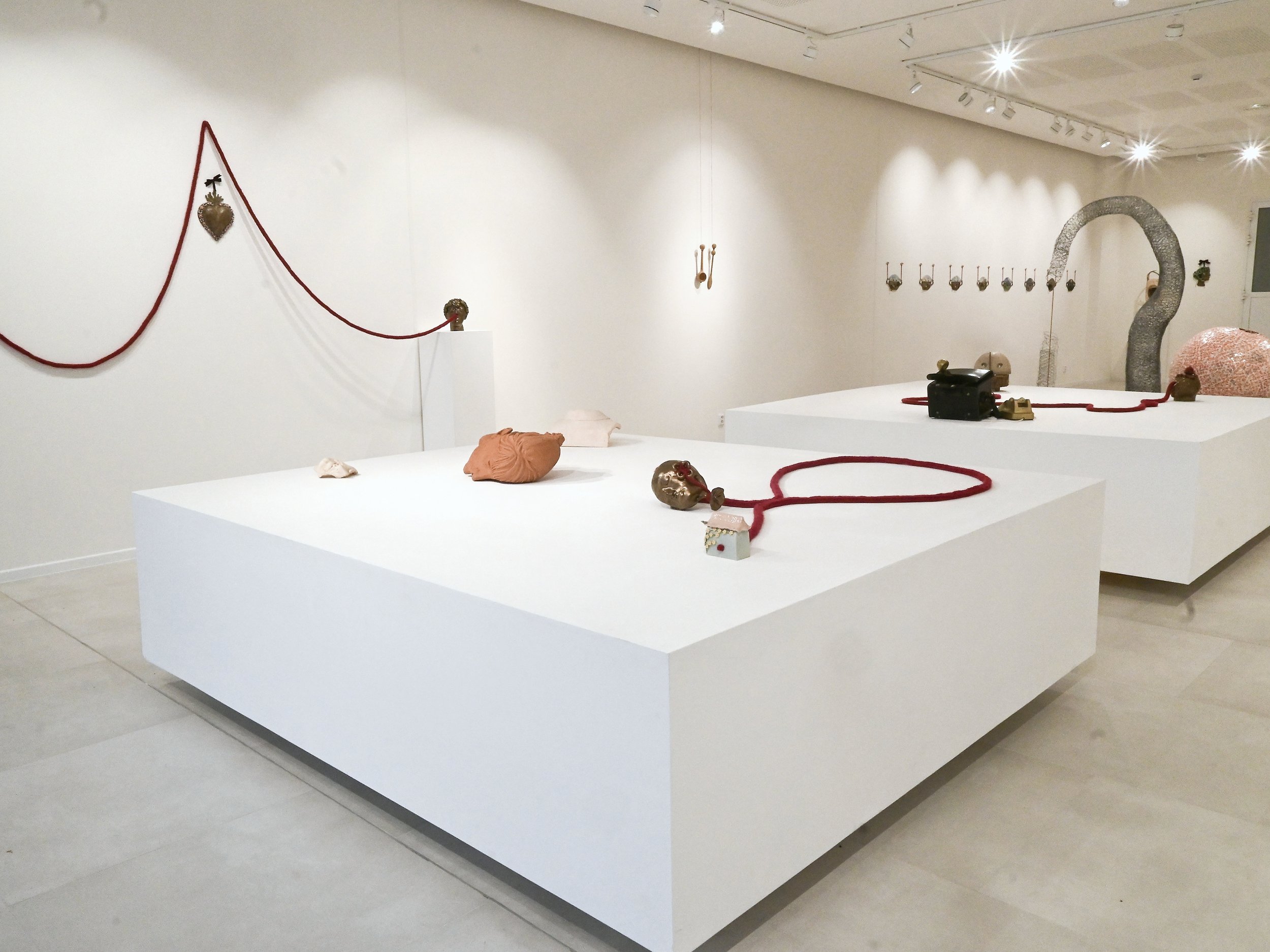
Holly Stevenson and Jane McAdam Freud 'Tracing the Irretraceable'
Holly Stevenson was the first artist-in-residence to launch the Freud Artist Residency (F.A.R.) with the project entitled Tracing the Irretraceable.
Tracing The Irretraceable is a research project, artist residency and exhibition series presenting Stevenson’s exploration of McAdam Freud’s work. The results were exhibited across three spaces, namely the Jane McAdam Freud Museum and Gallery, The Sigmund Freud Birthplace, both in Příbor, Czech Republic along with The Freud Museum, London.
The title of the exhibitions remains the same across the three museums but their contents and format are necessarily diverse in response to the individual collections.
The project examines the significance of psychoanalytic culture for contemporary art through Holly Stevenson’s and Jane McAdam Freud’s practices and in relation to the artists’ analysis of Sigmund Freud’s theories and collection.
-
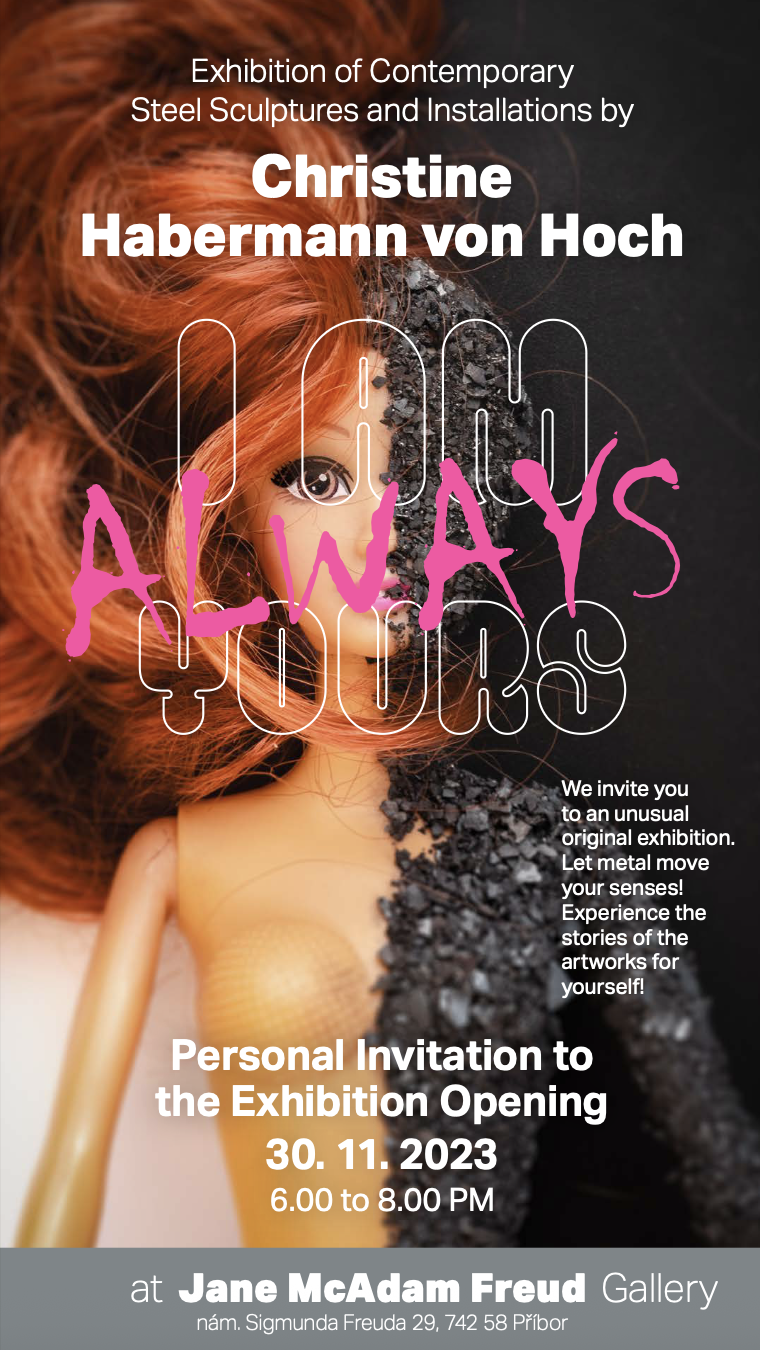
Christine Habermann von Hoch ‘I Am Always Yours’
Christine Habermann von Hoch, a renowned German and Czech sculptor, specializes in metal as her preferred medium. Her diverse portfolio includes monumental steel sculptures, smaller pieces for various spaces, and design creations for architecture, interiors, gardens, public areas, and urban environments. Christine, the daughter of acclaimed artist blacksmith Alfred Habermann (1930-2008), draws inspiration from her upbringing immersed in the art of blacksmithing.
‘I Am Always Yours’ utilises Habermann’s preferred medium of metal as a contemporary expression through which to share narratives and speak of the human experience, marking a departure from the artist’s previous practice.
Influenced by her friend and artist Jane McAdam Freud, and as the first exhibiting guest artist in the gallery, Christine's work in this exhibition serves as a tribute to their personal and professional bond. Jane, a mentor to Christine, encouraged her to push artistic boundaries and explore new approaches. The dialogue between their work is evident in the use of found objects and recycled materials to explore fundamental human questions.
-
Jane McAdam Freud 'Bodyscapes: Art Not War'
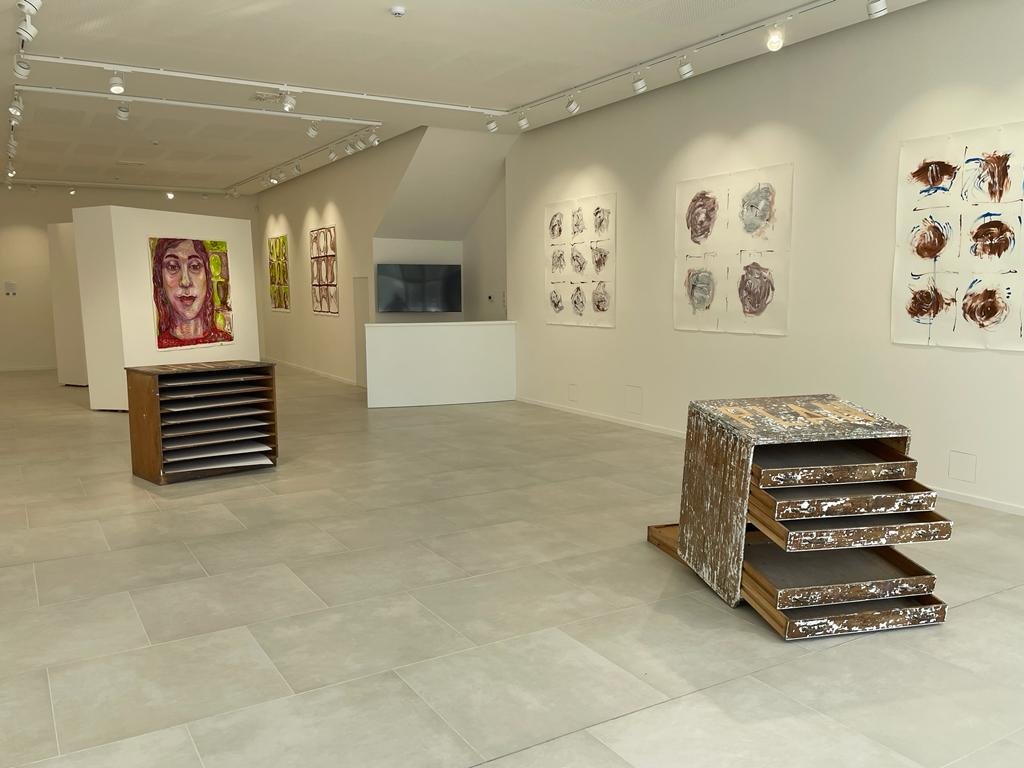
In this exhibition you can see several abstracted portraits. The paintings in general have a ‘virtual meeting’ format, with a standard screen of 9 sections, representing our new way of communicating, since the advent of Covid.
Many of the heads have no distinct features and some convey an expression of pain or suffering. As Sigmund Freud said, “Unexpressed emotions will never die. They are buried alive and will come forth later in uglier ways.”
Others depict a distorted perspective. In this changed world since Covid, we are now experiencing the shock of war.
This shock means we all unconsciously experience our futures with a level of uncertainty. We must repress this uncertainty in order to get on with our lives and fulfil our plans.
In Art we can experience these difficult emotions and help release them. This can only be positive.
-
Jane McAdam Freud ' Freud Family'
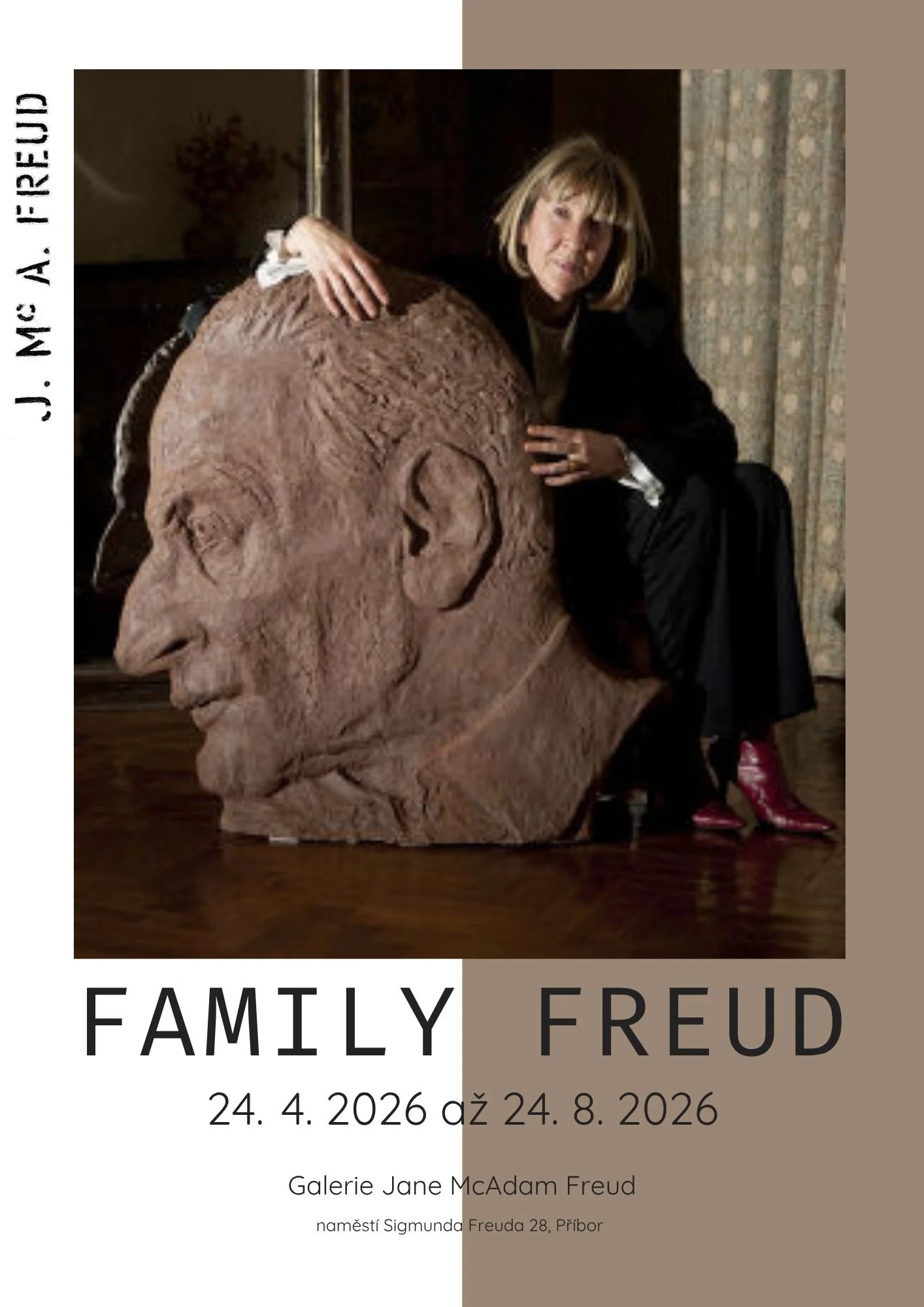
Description goes here24 April - 24 August 2026
Marking the 170th anniversary of the birth of Sigmund Freud, Family Freud explores the enduring dialogue between psychoanalysis and contemporary art through the work of his great-granddaughter, Jane McAdam Freud.
Bringing together sculpture, drawing, painting, film, and archival material, the exhibition reveals how McAdam Freud transformed Freudian ideas into a deeply personal artistic language. Developed through her residency at the Freud Museum London and her lifelong exploration of memory, identity, family, and the unconscious, the works invite visitors into a conversation across generations.
Rather than illustrating psychoanalytic theory, Jane McAdam Freud reimagines it through material, form, and process, creating a body of work that continues to shape our understanding of the relationship between art, memory, and the self.